Henry Todd
The ClimbHenry Todd is a British commercial expedition organizer whose successful record brought him into close working relationships with Sherpa staff and other guides, while his control of a key oxygen supply gave him leverage over a rival expedition. In the account of the 1996 Everest season, he appears both as a practical operator—concerned with clients, equipment, and timing—and as a businessman whose agreements and judgments became part of a much larger system of risk.
Identity and expedition work
Headed by Todd, described as a bearded and burly fifty-one-year-old former rugby player, Himalayan Guides was a commercial adventure company based in Edinburgh, Scotland. It had never lost a client. Its record reflected Todd’s practical approach and good fortune in the mountains, as well as his cooperative working relationship with Kami Noru Sherpa, the company’s sirdar, or manager, on the Everest expedition.
Kami Noru Sherpa was married, had three children, and belonged to a generation of Sherpas increasingly earning family income through mountaineering. The work ranged from carrying loads, cooking, and driving yaks to the more dangerous roles of high-altitude support. The book places Todd’s expedition business within that labor system: Sherpa workers helped establish camps and serve climbers for daily wages that could range from $2.50 to $50, while foreign organizers and clients made decisions about commercial expeditions and access to the mountain.
Todd and Kami Noru Sherpa had reason to feel confident after their 1995 Everest expedition from the Tibetan, or north, side. Eight clients reached the summit. The success did not make them complacent: by March 1996, both were anxious about the coming season. That unease appears alongside Kami Noru Sherpa’s concern about a comet he had noticed. When Todd asked what it meant to the Sherpas, Kami said, “We don’t know. We’re not liking it.” Todd regarded the belief as superstition, but took seriously the concern of people who knew the mountain well.
A working relationship across expeditions
Todd’s relationship with Kami Noru Sherpa was not limited to the 1996 undertaking. In 1995, Todd had led an expedition to Everest’s north side while recovering from a back injury at Base Camp; Anatoli Boukreev guided the successful climb. Todd wanted to secure Boukreev for 1996, when Himalayan Guides planned to climb from the south by the Southeast Ridge, the most popular route to the summit. The episode shows Todd’s reliance on experienced guides while retaining the commercial and organizational role of expedition leader.
Todd’s success also intersected with the larger division of work at Everest Base Camp. In 1996, the route through the Icefall was a contested source of expedition revenue. A team of Sherpas fixed ropes and ladders used by other expeditions, while organizers could receive money for access to that work. Todd and Mal Duff secured the contract, and Duff and his Sherpas hurriedly fixed the route the Indonesian team would use. The account identifies the arrangement as an unequal one: Sherpas performed the hazardous route work, while expedition organizers competed over the money it generated.
The narrator imagines a different arrangement in which a team of climbing Sherpas would fix the entire route to the summit and all expeditions would pay them as contractors. That possibility is framed as a future shift in control toward Nepali workers, not as an outcome already achieved. The contrast helps situate Todd’s role in an expedition economy where local expertise was indispensable, yet the organization and proceeds of the work remained subjects of dispute.
The oxygen negotiations
In early 1996, Todd became central to Mountain Madness’s effort to obtain oxygen. Boukreev, who had introduced Todd to staff at the Russian Poisk factory the previous year, was told by factory representatives that Todd had made an advance purchase agreement to become Poisk’s sole Everest supplier. Boukreev was surprised: Mountain Madness needed oxygen for its clients, and the season’s departure was approaching. He proposed buying from Zvesda in Moscow, where he believed he could secure a better price.
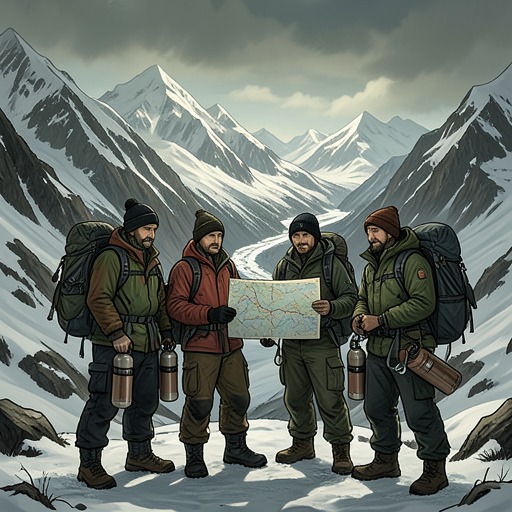
Mountain Madness tried to divide its order between suppliers. The plan was to buy Poisk canisters from Todd for the summit push and obtain from Zvesda the oxygen needed at lower elevations and by the Sherpas. Zvesda’s cylinders held four liters rather than Poisk’s three, but were proportionally heavier. Todd pressed the matter with Karen Dickinson, who was handling Mountain Madness business while Scott Fischer was away. He insisted that Poisk would deal only through him, and that the transaction included masks and regulators as well as canisters. Mountain Madness accepted his terms, Dickinson canceled her planned trip to Russia, and Todd secured the order.
Dickinson’s confirmation listed 55 three-liter Poisk bottles, 54 four-liter Zvesda cylinders, 14 regulators, and 14 masks. Those figures, initially a record of a completed purchase, later became the basis for close scrutiny of the expedition’s oxygen supply. The narrator presents the negotiations as ordinary expedition commerce—competitive, price-conscious, and driven by invoices—while making clear that its seemingly routine transactions had consequences at high altitude.
Todd also supplied advice used in Fischer’s oxygen calculations. At a flow rate of two to two and a half liters per minute, he estimated that one Poisk canister would last six hours. Two, he said, should provide twelve hours: enough to climb from Camp IV to the summit, descend to the South Summit to collect a third bottle, and continue downward. On paper, the schedule appeared adequate if the climb and descent proceeded without complications.
The summit push and the question of timing
At Camp IV, the Mountain Madness party had 62 canisters: nine heavier Zvesda cylinders and 53 lighter Poisk bottles. The Zvesdas were reserved for sleeping before the summit attempt; the Poisk bottles were designated for the climb. Five of the six climbing Sherpas planned to use oxygen, while Lopsang Jangbu Sherpa climbed without it, carrying a bottle for emergencies. The Sherpas carried 21 bottles uphill; the clients, Fischer, and Neal Beidleman carried 17 between them. In all, 38 Poisk canisters left Camp IV, leaving 15 full Poisk bottles there. The supply allowed little margin for a delay or a second summit attempt.
The expectations for fixed ropes were not met. Climbers from both the Fischer and Rob Hall expeditions understood that Lopsang and Hall’s climbing sirdar, Ang Dorje Sherpa, would leave ahead of the clients to prepare the route. Instead, the Sherpas had not gone out early to fix the ropes. Lopsang later said that a member of a Montenegrin team that had attempted the summit the day before had told him the ropes were already fixed. Jon Krakauer questioned that explanation; the account also notes that Lopsang and Ang Dorje carried rope in their packs. It leaves the precise cause uncertain, rather than establishing that Todd was responsible for the change or that either expedition leader knowingly withheld information.
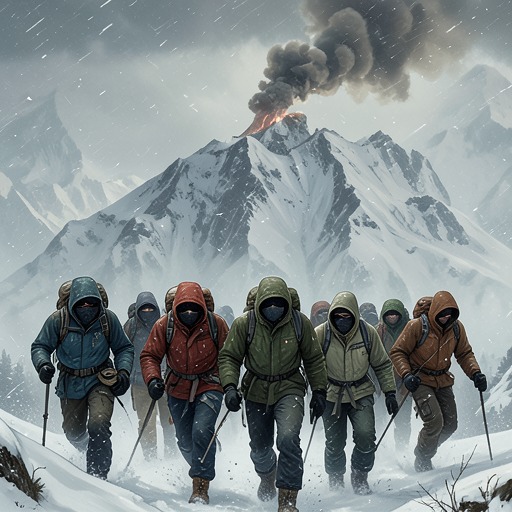
At Camp II, Todd joined more than twenty people watching climbers high on the mountain. They could see climbers still moving slowly above the South Summit at 2 p.m., with cloud streaming over the summit. The Sherpas watching became alarmed by the star they had previously noticed, which they said had appeared in the middle of the day. Todd agreed that it was a bad sign. He radioed Hall’s Base Camp to ask for the turnaround time and was told it was two o’clock: the deadline had passed.
Todd’s observation of the late climbers connects the earlier concern about the comet to the immediate practical danger of continuing too late. He also recognized the effects of exhaustion on judgment, observing that people who were spent could stop thinking logically and believe they could continue. His warning does not, in the evidence presented, establish what the climbers above did in response. It does make him one of the witnesses below who understood that the schedule, oxygen limits, and deteriorating conditions were converging.
Significance
Todd’s part in the narrative is defined by the overlap of commercial competence and high-altitude uncertainty. Himalayan Guides had an exceptional client record, and Todd’s earlier expeditions and practical reputation helped sustain that business. Yet the 1996 season involved constraints that no sales record could remove: oxygen had to be secured and allocated, route work depended on Sherpa labor, and climbers needed to turn around before fatigue, time, and dwindling supplies left too little room for error.
His dealings with Mountain Madness show that equipment procurement was not background administration. The exclusive Poisk arrangement shaped which cylinders the expedition bought; the cylinder sizes and weights shaped how they were assigned; and Todd’s estimates informed the plan for how long oxygen would last. His presence among those monitoring the summit route then brought a different responsibility into view: recognizing that the two o’clock deadline had passed while climbers remained high on the mountain.
The account does not reduce these episodes to a single explanation for the disaster. It presents negotiations, route preparation, labor arrangements, oxygen calculations, and late-day decisions as distinct parts of a commercial expedition whose safety depended on how they worked together. Todd’s role is important precisely because it crosses those domains: he was an organizer and supplier, a prior partner in successful climbs, and an observer who identified the danger of a missed turnaround time.